

Key takeaways
- Use filtered or boiled-and-cooled water for fewer bubbles, though freezing direction does the most.
- Store finished cubes in a sealed bag so they do not absorb freezer odours that could affect delicate whiskeys.
- Pour whiskey over ice rather than dropping ice into the glass from a height, which can chip the glass.
- Match ice size to glass: a 2-inch cube suits most rocks glasses; use a 2.5-inch sphere only with wide mouths.
- For cask-strength pours, a little dilution can be welcome; for gentle whiskies, use larger ice or stones.
For neat pours and on-the-rocks whiskey, a single large clear cube or sphere, roughly 2 to 2.5 inches across, is the best all-round choice because it chills the glass while diluting slowly; small bagged cubes are the fastest to water a drink down, and reusable stones chill without diluting but also cool less. Which one suits you depends on how you drink: slowly and neat, or quickly over ice.
Our top picks

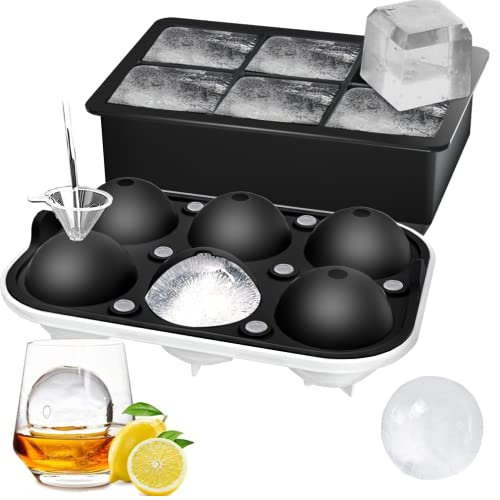


As an Amazon Associate we earn from qualifying purchases at no extra cost to you.
Whiskey Ice Options at a Glance
| Option | Best for | Key points reported | Limits |
|---|---|---|---|
| Large silicone cube tray | Everyday slow-melt ice | Simple, inexpensive; large single cubes pack well in trays | Usually cloudy |
| Sphere mold (Tovolo, 2.5-inch) | Sipping bourbon or scotch | Lowest surface area for volume; stackable, dishwasher safe per the listing | Needs wide glass; cloudy unless directional |
| Directional-freezing cube tray (True Cubes, ClearlyFrozen, OnTheRocks) | Clear, display-quality cubes | True Cubes makes four 2-inch cubes; ClearlyFrozen ten; OnTheRocks six, per The Humble Garnish | Many hours of freezing; some cost |
| Insulated clear sphere maker (TINANA, UNIGUL, Wintersmiths) | Clear spheres | Reviewers report roughly 26 to 30 hours for TINANA spheres | Planning needed; premium tiers for metal systems |
| Countertop clear ice machine (Frigidaire EFIC452) | On-demand square cubes | Listings state up to 40 lb a day and 2.4 lb storage | Large footprint |
| Whiskey stones | Zero dilution | Chill without water, according to one retailer guide | Cool less than ice |
The figures are those stated by makers, listings or the outlets named. Confirm cube and sphere diameter for the version you buy.
What Whiskey Actually Wants From Ice
Ice does two jobs in a glass: it cools the drink and it adds a little water. A small amount of dilution can open up aromas, which is why many drinkers like a splash of water, but too much flattens flavour. Large pieces slow both processes. Guides explain that a sphere has the smallest surface area for its volume, so it melts the slowest. One guide gives approximate surface-area-to-volume ratios of 2.7 to 1 for a 2.25-inch sphere, about 3 to 1 for a 2-inch cube and 6 to 1 for four 1-inch cubes. Another source says a square cube dilutes roughly 15 to 20 percent faster than a sphere of equal weight.
A bourbon comparison in a roundup measured an average melt rate of 0.113 grams per second for the sphere and 0.162 for cubes, with the cubes melting 23.3 grams against 19.8 for the sphere. The cubes also chilled the drink faster and to a lower temperature. That comparison used one sphere against several small cubes, and a more skeptical reviewer found that large spheres and small cubes of the same total mass perform very similarly. So there is a real trend, but do not expect a dramatic difference from shape alone; size is the bigger lever.
Cube vs Sphere
When a cube is better
A 2-inch cube packs neatly into a tray, fits a wider range of glasses and has a clean visual presence in a tumbler. One source says large cubes are close behind spheres on melt rate. If you make several drinks at a time, cubes are also simpler to store and stack.
When a sphere is better
If you drink slowly, a sphere gives the slowest dilution and the classic look. Its drawback is fit: a 2.5-inch sphere needs a rocks glass with a generous opening. Narrow glasses force a smaller sphere, which melts faster.
Clear Versus Cloudy
Clear ice is a visual upgrade, and reviewers also associate it with fewer cracks. The Humble Garnish explains that directional freezing pushes impurities away from the cube as water freezes from one direction. The same review says basic molds from OXO, Tovolo and Dexas produce cloudy or cracked ice because they freeze from all sides. If you only care about slow melt, cloudy ice is perfectly good for drinking. If you want a bar-quality look, choose a directional product.
Choosing by Budget Tier
Budget tier
Silicone large-cube trays and basic sphere sets such as Tovolo, Glacio and HONYAO are the entry point. Reviewers describe them as good value, with occasional leaks or cloudiness.
Mid-range tier
True Cubes, ClearlyFrozen and TINANA give clear ice using an ordinary freezer. America’s Test Kitchen is reported to have named True Cubes the best clear ice mold, and Thirsty Bear picks TINANA for clear spheres.
Premium tier
Wintersmiths, OnTheRocks and a countertop clear ice machine are the higher tiers. You pay for durability, convenience or capacity.
Whiskey Stones and Other Cooling Options
Stones chill a drink without adding water, which suits purists. Retailer guides note the trade-off: they cool less than ice and are not a replacement if you want a properly cold drink. Stainless steel chillers behave similarly. Wash stones as the maker directs and store them in the freezer. Do not use stones with a cracked surface, since small chips could end up in a glass.
Practical Tips for Better Whiskey Ice
- Use filtered or boiled-and-cooled water for fewer bubbles, though freezing direction does the most.
- Store finished cubes in a sealed bag so they do not absorb freezer odours that could affect delicate whiskeys.
- Pour whiskey over ice rather than dropping ice into the glass from a height, which can chip the glass.
- Match ice size to glass: a 2-inch cube suits most rocks glasses; use a 2.5-inch sphere only with wide mouths.
- For cask-strength pours, a little dilution can be welcome; for gentle whiskies, use larger ice or stones.
Pick X If… Decision Table
| If you… | Pick | Reason |
|---|---|---|
| Sip slowly and want the slowest melt | 2.5-inch sphere (Tovolo or TINANA) | Lowest surface area per volume |
| Want clear cubes for guests | True Cubes or ClearlyFrozen | Directional freezing, 2-inch cubes |
| Hate waiting for ice | Frigidaire EFIC452 | On-demand clear square cubes |
| Want no dilution | Whiskey stones | Chill without water |
| Want the cheapest start | Silicone large-cube tray | Low cost, slow melt, some cloudiness |
Alternatives
- The cooler method: Freeze a cooler of water and cut blocks, which The Humble Garnish says is inexpensive but takes two to three days.
- Single big rock in a tumbler: A hand-cut piece looks great and melts slowly, though it requires care with tools.
- Chilling the bottle or glass: If you dislike dilution, chilling the glass in the freezer for a short time reduces the need for ice at all.
Matching Ice to the Kind of Whiskey
Different drinks reward different ice. A smooth, lower-proof bourbon or blended Scotch often tastes fine with a large cube that dilutes steadily as you sip. A cask-strength bottle can benefit from a little extra water, so a slightly smaller piece, or a sphere that you leave to sit for several minutes, can open it up. A delicate single malt that you enjoy for its aroma is often better served with the largest, clearest piece you can fit, or with no ice at all and a few drops of water added by hand. These are common bartending habits rather than rules, and personal taste should win. If you are unsure, start with one 2-inch cube, taste after a few minutes, and adjust the next pour.
Common Mistakes
- Using small trays from the freezer door for a premium bottle. The pieces melt fast and water the drink down in minutes.
- Buying a sphere mold without measuring the glass. A 2.5-inch ball can sit awkwardly at the rim of a narrow tumbler.
- Leaving ice in an open container beside strong-smelling food, which can change how a delicate whiskey tastes.
- Expecting stones to replace ice. They hold cold but do not carry as much, so a warm room will warm the drink quickly.
- Over-freezing directional trays. Reviewers note that True Cubes can be hard to release if left in too long.
Ice for Whiskey Highballs and Mixed Drinks
Not every whiskey drink wants a single large piece. A highball with soda is usually served in a tall glass with several regular cubes or a long spear, because the drink is meant to be cold and diluted by design. Cocktails like a whiskey sour are shaken with ordinary ice and strained, so the finished glass may hold fresh large ice or none. Save the premium large-format ice for stirred drinks and neat pours, where its slow melt is the whole point.
Bottom Line
For most drinkers a clear 2-inch cube is the practical best: it fits more glasses, chills well and melts slowly. For slow sippers with wide glasses, a sphere is marginally better. Buy stones only if no dilution is the priority.
Frequently Asked Questions
What size ice is best for whiskey?
Roughly 2 to 2.5 inches across is the common recommendation, because it melts slowly without crowding a rocks glass. Smaller pieces dilute faster.
Is a sphere really better than a cube?
Spheres melt slightly slower because of their lower surface area, and one source puts cube dilution at roughly 15 to 20 percent faster. The difference is modest, and a large cube is a close second.
Does clear ice make whiskey taste better?
Clear ice mostly improves appearance and cracks less. It does not change flavour much, though it avoids trapped air and impurities from cloudy cores. Choose it if looks matter to you.
Should I use whiskey stones instead of ice?
Stones avoid dilution but chill less effectively, so the drink may not get very cold. They suit people who dislike water in their whiskey and accept a milder chill.
Can I use tap water?
Yes, though filtered or boiled-and-cooled water can reduce bubbles and off flavours. Freezing direction affects clarity far more than the water source.
How do I stop ice from tasting like the freezer?
Keep ice in a sealed container or bag, away from strong-smelling foods, and replace old ice regularly. Wash molds as the manufacturer directs.








Write Your Review
No reviews yet. Be the first to share your experience!