

Key takeaways
- Snow cone syrup stays fresh longest when you keep the cap tight, the bottle clean around the neck, and the storage spot cool.
Snow cone syrup stays fresh longest when you keep the cap tight, the bottle clean around the neck, and the storage spot cool, dark and away from heat, with the label’s own instructions overriding any general rule. Whether a bottle needs the refrigerator after opening depends on the product, so read the label before you decide.
Most syrup problems come from the same few habits: leaving a bottle in a hot car, letting syrup crust around the cap, and dipping dirty spoons into the neck. Fix those three and you will avoid most cloudy bottles, off flavors and sticky shelves. This guide covers where to store bottles, how to handle opened ones, what to do with pumps and decanted syrup, and how to spot a bottle that has gone past its best.
Start With the Label
Different syrups are made with different sweeteners, preservatives and concentrations, so no single rule fits every bottle. Some labels say to refrigerate after opening. Others say a cool pantry is enough. Concentrates and flavoring bases may have different guidance from ready-to-use syrups, and sugar-free syrups can behave differently from traditional ones. Look for a best-by date, a storage statement and any instructions about shaking before use. When the label and a general tip disagree, follow the label.
For anyone preparing syrup at home, such as a simple sugar syrup flavored with fruit or extract, keep a stricter routine. Homemade syrups usually lack commercial preservatives, so they belong in a clean, sealed container in the refrigerator and should be used within a short window. If you have questions about food safety for a specific recipe, ask a qualified professional or follow guidance from a trusted food safety authority.
Where to Keep Syrup Bottles
Unopened bottles
Store sealed bottles in a cool, dry cupboard or pantry away from the stove, the dishwasher and direct sunlight. Temperature swings are worse than steady, moderate warmth, because they promote condensation inside the bottle. A basement shelf or an interior closet usually works better than a garage shelf that heats up in summer.
Opened bottles
Wipe the neck and threads with a clean damp cloth before closing the cap, so dried syrup does not glue the lid shut or collect dust. Close the cap firmly each time. If the label calls for refrigeration, store the bottle upright in the door or on a shelf, and let it come back toward room temperature before pouring, since cold syrup is thicker and slower.
Bottles with pumps
Pumps are convenient but they are also a place where air, sugar and bacteria can build up. Rinse the pump after each event, let it dry and store it upright. If you keep a pump on a bottle between events, treat the bottle like an opened one and keep it cool. Remove and wash pumps that start to stick or sputter.
Syrup moved to other containers
Decanting into glass or food-safe bottles is fine if the containers are clean and dry. Label them with the flavor and the date you filled them. Do not top off an old bottle with fresh syrup, because mixing batches hides how old the oldest syrup is.
Storage Choices at a Glance
| Situation | Better habit | What to avoid |
|---|---|---|
| Unopened bottles | Cool, dry, dark cupboard | Car trunks, sunny windowsills, garage heat |
| Opened bottles | Wipe the neck, cap tightly, follow the label | Leaving the cap loose or crusted |
| Homemade syrup | Clean sealed container in the refrigerator | Room temperature storage for days |
| Pumps and decanted bottles | Rinse, dry, label with a date | Topping off old syrup with new |
| Event storage | Cooler bag during the party, then back to the pantry | Leaving bottles in the sun all afternoon |
Signs a Bottle Is Past Its Best
Trust your eyes and nose before you pour. Cloudiness in a syrup that is normally clear, floating specks, an unusual smell, a fizzing sound when opened or visible growth around the cap all point to a bottle you should discard. Crystals at the bottom of a sugar syrup are not always a sign of spoilage, since sugar can come out of solution in cold or dry conditions. Warm water bath with the cap on can dissolve harmless crystals, but if the syrup also smells or looks wrong, throw it out. When in doubt, discard it. A replacement bottle is a small cost next to a ruined party or an upset stomach, so a doubtful bottle is not worth saving.
Color fade is another clue. Syrups left in light slowly lose vibrancy, and flavors can flatten. This is a quality issue rather than a safety issue, but it means your cones will taste weaker than you expect.
Storing Syrup Through a Busy Season
If you run a stand or host several parties, rotate stock. Put new bottles behind older ones, and use the oldest first. Keep a marker near the shelf and write the open date on each bottle. Store only what you need for a given event in a cooler bag, and keep the rest in the pantry. After a summer weekend, take stock, discard anything that looks off and wipe down the shelf. Going into the 2026 season, check last year’s leftovers before you buy more, since opened bottles that sat through winter in a garage are the ones most likely to have a problem.
Handling Large Bottles and Transport
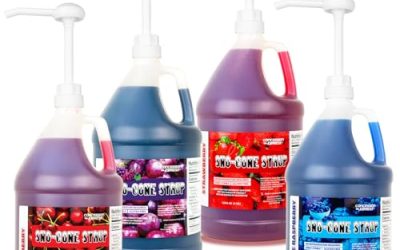
Big bottles and jugs are economical for frequent use, but they stay open longer, which gives air and dust more time to reach the syrup. If you buy large sizes, decant a working amount into a smaller clean bottle or pump bottle and keep the large one sealed in the pantry. That way the main container is opened only when you refill, and a spill or a contaminated spoon affects only the small bottle.
When you take syrup to a park, a school fair or a friend’s yard, treat transport as part of storage. Keep bottles upright in a box or crate so caps cannot leak into each other, and wrap a towel around the base to stop clinking. Use an insulated bag if the day is hot, and keep the bag out of direct sun. Never leave syrup in a parked car, because the temperature inside climbs quickly and a bottle can warp, leak or pop its seal.
At the event itself, pour from the bottle rather than dipping a spoon, and do not return unused syrup from a cup to the bottle. Cap bottles between servings to keep out insects and dust. At the end of the day, wipe each neck, tighten each cap, and return everything to the cool shelf instead of leaving it on the serving table overnight.
Before You Buy or Store Checklist
- Read the label for refrigeration and best-by guidance
- Choose a cool, dark storage spot away from heat sources
- Wipe the neck and cap after every pour
- Write the open date on every bottle
- Rinse and dry pumps after each event
- Discard syrup that looks cloudy, smells odd or shows growth
Related guides
- Manual Vs Electric Ice Shavers Which Is Better For Home Use
- How To Make Fluffy Shaved Ice With A Manual Shaver
- Commercial Snow Cone Machine For Business
Frequently Asked Questions
Does snow cone syrup need to be refrigerated?
It depends on the product. Many commercial syrups are fine in a cool pantry, while others ask for refrigeration after opening. Follow the label, and refrigerate homemade syrup.
Why is my syrup crystallizing?
Sugar syrups can crystallize when they get cold, lose moisture or sit with a loose cap. Gentle warming with the cap on often dissolves it, but discard the bottle if it also smells or looks wrong.
Can I leave a pump on the bottle?
You can, as long as you keep the bottle cool and rinse the pump regularly. Remove it if it clogs, and wash both parts before the next event.
How long does opened syrup last?
Check the label for guidance, since shelf life varies by product. Use the oldest bottle first, and discard any syrup with an off smell, unusual cloudiness or visible growth.
More from Amazon
Programs that pair well with the guide above. Offers and eligibility are set by Amazon and may change.
Set up recurring deliveries of everyday items on eligible products. Terms and savings are set by Amazon.
Explore Subscribe & SaveCollect the home and kitchen items you want in one registry that guests can shop from.
Create a wedding registryFree shipping on eligible items, Prime Video and more. Eligible new members can start with a free trial.
Start a Prime free trialAudiobooks and podcasts to listen to on the go. Eligible new members can start with a free trial.
Try Audible freeAs an Amazon Associate we earn from qualifying purchases.

Write Your Review
No reviews yet. Be the first to share your experience!