

Key takeaways
- Using warm butter, which smears instead of cutting.
- Overworking the mix, which makes crusts tough.
- Pressing with the wrist alone instead of your body weight.
- Ignoring a loose handle rivet; tighten or replace it before it fails.
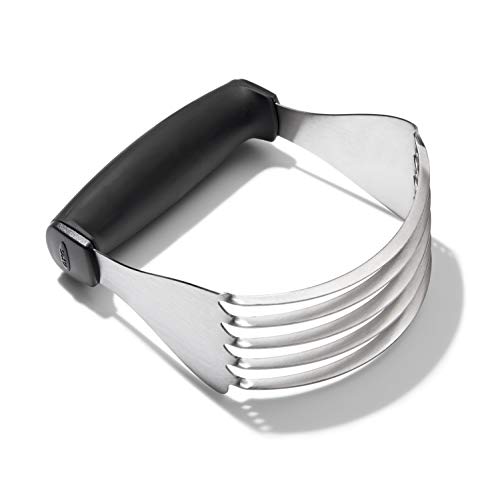
The best pastry blender for most bakers is the OXO Good Grips Stainless Steel Dough Blender, thanks to its thick curved blades and a broad cushioned handle that stays comfortable when cutting cold butter. The Spring Chef Medium Dough Blender is a close alternative, and the Rainspire XL is a heavy-duty budget option. Choose blade-style over thin-wire for firm butter, and look for a handle you can grip without your palm hurting.
Our top picks


As an Amazon Associate we earn from qualifying purchases at no extra cost to you.
Quick comparison of pastry blender picks
| Pick | Best for | Cutting element | Care | Price range |
|---|---|---|---|---|
| OXO Good Grips Dough Blender | Comfort and consistency | Stainless steel blades | Dishwasher safe | Mid-range |
| Spring Chef Medium Dough Blender | Home bakers | Thick stainless blades | Dishwasher safe | Budget |
| Rainspire XL Pastry Cutter | Large batches | 304 stainless steel | Dishwasher safe | Budget |
| KitchenAid Gourmet Pastry Blender | Budget-friendly all-rounder | Stainless steel | Hand wash suggested | Budget |
| Cuisipro 5-Blade | Even, fine crumbs | Five blades | Check maker guidance | Mid-range |
| Norpro Deluxe | Wire-style traditional | Stainless wires | Hand wash suggested | Budget |
Details come from manufacturer descriptions and retailer listings; care instructions vary, so follow the label that ships with your tool.
Best overall: OXO Good Grips Stainless Steel Dough Blender
OXO’s blender has thick curved blades and a soft, wide handle that cushions pressure, which matters when you are cutting very cold, stiff butter into flour. It is dishwasher safe. The trade-off is that the blades are fixed, so a very wide mixing bowl may need some wrist movement to reach corners.
Best value: Spring Chef Medium Dough Blender
This model uses thick stainless blades and a pressure-absorbing grip, and some roundups rank it close to OXO for general home use. It is a good pick if you bake pie crusts and biscuits a few times a month. Look at the blade spacing: slightly wider spacing is better for chunky butter, tighter for finer crumbs.
Best heavy-duty budget: Rainspire XL Pastry Cutter
The XL size is built from 304 stainless steel and fits a big mixing bowl, so it suits scones and large pie batches. It is dishwasher safe. It is a bulkier tool, so it is less comfortable for small hands.
Best low-cost brand name: KitchenAid Gourmet Pastry Blender
KitchenAid’s blender is labelled budget friendly in several roundups and has the sturdy feel of a brand tool. It works well for standard pie dough. If you want easy cleanup, check whether your version is dishwasher safe before putting it in.
Best for fine crumbs: Cuisipro 5-Blade
Five blades cut through butter faster than three-wire styles and produce more uniform pea-sized pieces. This suits bakers making laminated doughs or shortbread. It has more edges to clean, so rinse promptly.
Best traditional wire style: Norpro Deluxe
Wire-style blenders are lighter and cheaper, and they work for soft fats and room-temperature shortening. They can bend under cold butter, so use them for lighter doughs.
Blade versus wire: which cuts butter better?
| Feature | Blade style | Wire style |
|---|---|---|
| Cold, hard butter | Cuts cleanly | Can bend or flex |
| Soft fats | Works well | Works well |
| Cleaning | Easy to rinse | Butter can wedge between wires |
| Durability | Higher | Wires can loosen over time |
For most pie dough, blades win. For biscuit dough with softer fat, a wire tool is fine.
How to choose a pastry blender
Handle comfort
You will press down with your palm, so a wide cushioned or rounded handle prevents sore spots. Thin steel handles are fine for a single pie but tiring for a batch of scones.
Blade width and depth
A blender 3 to 4 inches wide works in most bowls. Wider heads cut more per pass but need a larger bowl.
Material
Stainless steel resists rust and does not absorb odors. Avoid coatings that can chip.
Care
If the maker says dishwasher safe, wash on the top rack to avoid dulling the blades. Dry immediately to prevent water spots.
How to use a pastry blender: step by step
- Chill the butter and cut it into 1/2-inch cubes so the blender can grip it.
- Press the blades straight down, then twist slightly to cut.
- Scrape the blades clean with a butter knife every few passes.
- Stop when you see pea-sized bits of butter coated in flour; those pockets create flaky layers.
Common mistakes
- Using warm butter, which smears instead of cutting.
- Overworking the mix, which makes crusts tough.
- Pressing with the wrist alone instead of your body weight.
- Ignoring a loose handle rivet; tighten or replace it before it fails.
Pastry blender versus other tools
| Tool | Speed | Control | Risk of warm butter | Best for |
|---|---|---|---|---|
| Pastry blender | Medium | High | Low | Pie crust, biscuits, scones |
| Two knives or a fork | Slow | Medium | Low | Tiny batches |
| Food processor | Fast | Medium | Medium, easy to overmix | Large batches |
| Fingertips | Medium | High | High, body heat softens butter | Rubbed-in crumb toppings |
A pastry blender sits between a fork and a processor: faster than the first, gentler than the second. For a single 9-inch crust with 8 tablespoons of butter, expect about one to two minutes of cutting.
Worked example: a single pie crust
For a standard crust you use roughly 1 1/4 cups of flour and 1/2 cup (8 tablespoons) of cold butter. Cut the butter into 1/2-inch cubes, drop them into the flour, and cut for 10 to 15 passes until most pieces are the size of peas, with a few larger flakes. Add ice water a tablespoon at a time. Because the tool never melts the butter, the crust stays flaky; a food processor can turn the same butter into a paste in a few seconds if you let it run.
Durability and what wears first
Handles are the first failure point on cheaper tools: look at how the handle attaches to the frame. Welded joints last longer than press-fit ones. Thin wires can bend, and bent wires stop cutting evenly. Stainless blades rarely dull, but a dishwasher’s heat can loosen plastic handles over time, so hand wash if the label recommends it. Store the tool hanging or in a drawer where the blades will not rub against other utensils.
Other uses beyond pastry
A pastry blender also mashes avocado for guacamole, breaks up cooked ground meat in the pan, chops hard-boiled eggs for egg salad and cuts butter into crumb toppings for muffins. These extra jobs make a sturdy stainless tool worth keeping near the stove, not only in the baking drawer.
Frequently Asked Questions
What is a pastry blender used for?
It cuts cold fat such as butter or shortening into flour for pie crusts, biscuits and scones. It makes small pieces of fat without melting them with your hands.
Can I use a fork or food processor instead?
A fork works for tiny batches but is slow. A food processor is quick but easier to overmix, so pulse in short bursts.
Is a pastry blender dishwasher safe?
Many stainless models are, including the OXO and Rainspire according to their descriptions. Check your label, and avoid the dishwasher for wooden handles.
Blade or wire pastry blender: which is better?
Blade styles handle cold butter more easily and last longer. Wire styles suit soft fat and light use.
How do I clean butter off a pastry blender?
Soak it in warm soapy water for a few minutes and scrub between blades with a brush. Dry fully before storing.





Write Your Review
No reviews yet. Be the first to share your experience!