

Key takeaways
- Compare the best root beer in glass bottles, from honey-brewed Sprecher and cane sugar Virgil's to caffeinated Barq's, with sweetener and sugar facts.
As an Amazon Associate we earn from qualifying purchases.
Root beer is the soda fountain classic behind the float, the frosty mug and a long line of American bottlers, and the category has real splits worth reading before you buy. The biggest split is the sweetener: some of these bottles are sweetened with cane sugar, one runs on glucose syrup and honey, and one mainstream pick is sweetened with high fructose corn syrup. The second split is caffeine: root beer is usually caffeine free, but one famous brand here prints caffeine on its label as an ingredient.
Every fact below comes from a label or a listing. Sweetener, calorie and sugar figures are printed panel data for the exact pack linked, and every flavour description is the maker’s own wording rather than a tasting note.
This article contains affiliate links, and we may earn a commission when you buy through them at no extra cost to you.
Quick Answer
For a craft bottle, Sprecher Root Beer is the standout: a fire-brewed 16 fl oz bottle sweetened with glucose syrup and raw Wisconsin honey. Virgil’s and Boylan are the cane sugar craft picks in 12 fl oz glass, IBC is the cane sugar classic sold since 1919, and Barq’s is the mainstream option, the only pick with caffeine, at 22 milligrams per bottle.
Sprecher Root Beer
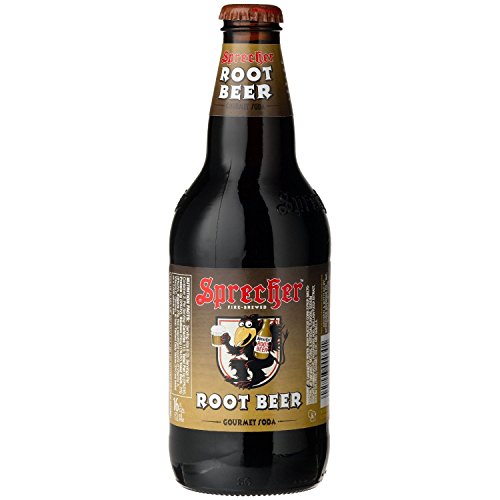
Sprecher brews its sodas in Milwaukee in what the maker describes as a handmade, gas-fired brew kettle, and the root beer is the flagship soda. The label copy explains the process in the maker’s own words: the extracts are prepared by combining honey, pure vanilla and aromatic botanicals, and the maker promises the dark honeyed brew builds a frothy head in a frosted mug.
The sweetener line separates Sprecher from every other pick here. There is no cane sugar and no high fructose corn syrup on this label; the printed sweeteners are glucose syrup and raw Wisconsin honey. The panel for the 16 fl oz bottle prints 260 calories and 51 grams of sugars, with 75 milligrams of sodium, the biggest serve in the guide because the bottle is four ounces larger than the rest. The maker’s label copy states the soda is caffeine free and gluten free. This listing sells the bottles as a four-count pack of six, twenty-four in total.
Specs
- Pack: 4-count glass bottles, pack of 6 (24 bottles), 16 fl oz each
- Sweetener: glucose syrup and raw Wisconsin honey, per the label
- Label panel per bottle: 260 calories, 51 g sugars, 75 mg sodium
- Caffeine: caffeine free, per the maker’s label copy
- Brewing note: fire-brewed in a gas-fired brew kettle, per the maker
Virgil’s Handcrafted Root Beer

Virgil’s is the craft pick built on a short ingredient list: the current label prints five ingredients, from sparkling filtered water and cane sugar to citric acid. The maker describes the recipe as a blend of roots and spices, and the flavour notes the brand attaches to that blend include anise, licorice, vanilla, cinnamon, clove, wintergreen and nutmeg. Virgil’s also states in its own copy that the drink contains no caffeine and no preservatives, the cleanest label in this guide.
The panel for the 12 fl oz bottle prints 170 calories and 42 grams of sugars, with no sodium listed. Older panels printed 160 calories, so this guide follows the current label and the bottle in hand is the final word. The format here is the case: a pack of twenty-four glass bottles.
Specs
- Pack: 24 glass bottles, 12 fl oz each
- Sweetener: cane sugar
- Label panel per bottle: 170 calories, 42 g sugars, 0 mg sodium
- Caffeine: caffeine free, and no preservatives, per the maker’s copy
- Ingredients as printed: sparkling filtered water, cane sugar, natural flavors, caramel color, citric acid
IBC Root Beer

IBC is the heritage pick. The brand dates itself to 1919 on its own packaging, a Prohibition-era St. Louis soda, and the dark glass bottle is part of the identity: supplier copy describes the glass packaging as preserving carbonation. The maker’s description of the flavour is a smooth and creamy taste.
The current glass bottle label is a cane sugar label. Listings describe this bottle as made with sugar, and its printed ingredients include quillaia extract, which supports the foamy pour. The bottle prints its caffeine status on its face: no caffeine. The panel prints 160 calories and 40 grams of sugars per 12 fl oz bottle, with 60 milligrams of sodium, the lowest sugar figure in the guide. This listing is the six-count of 12 fl oz glass bottles, the smallest pack here and the easiest first purchase.
Specs
- Pack: 6 glass bottles, 12 fl oz each
- Sweetener: sugar, marketed as made with cane sugar
- Label panel per bottle: 160 calories, 40 g sugars, 60 mg sodium
- Caffeine: caffeine free, stated on the bottle label
- Heritage: brand dates to 1919, per its own packaging
Boylan Root Beer

Boylan is the oldest bottler in this guide. The company’s own story starts in 1891, when a pharmacist named William Boylan created an elixir in his Paterson, New Jersey apothecary, and the current label still leads with the same promises: made with pure cane sugar in small batches, and never high fructose corn syrup. The brand’s flavour description is specific: a rich sassafras flavour with notes of cinnamon, sweet birch, vanilla and wintergreen oil, as the maker’s retail copy puts it.
The label behind that copy is short: carbonated water, cane sugar, natural and artificial flavors, caramel color, sodium benzoate and citric acid. The panel prints 170 calories and 43 grams of sugars per 12 fl oz bottle, with 80 milligrams of sodium, the highest sodium figure in this guide, though all five picks sit in the same low range. The maker states the root beer is caffeine free. This listing sells the bottles as a twelve count, a middle format between the IBC six-pack and the two cases above.
Specs
- Pack: 12 glass bottles, 12 fl oz each
- Sweetener: cane sugar, and never high fructose corn syrup, per the label
- Label panel per bottle: 170 calories, 43 g sugars, 80 mg sodium
- Caffeine: caffeine free, per the maker
- Heritage: bottling since 1891, per the maker’s label copy
Barq’s Root Beer

Barq’s is the mainstream pick and the deliberate outlier. The brand’s own slogan, printed on its packaging, is that Barq’s has bite, and the label shows where the bite comes from: caffeine is a listed ingredient. The panel prints the caffeine content directly, 22 milligrams per 12 fl oz, making Barq’s one of the very few caffeinated root beers on the market and the only caffeinated pick here. That single fact decides its audience: a poor choice for children’s evening floats, a reasonable one for drinkers who want a root beer that behaves more like a cola.
The rest of the label is mainstream too. The sweetener is high fructose corn syrup, the only corn syrup panel here. The panel prints 160 calories and 44 grams of sugars per 12 fl oz, with 65 milligrams of sodium, so on sugar it sits level with the cane sugar craft bottles despite the different sweetener. The brand dates itself to 1898 on the pack, and this listing is the glass bottle version, twelve 12 fl oz bottles.
Specs
- Pack: 12 glass bottles, 12 fl oz each
- Sweetener: high fructose corn syrup
- Label panel per bottle: 160 calories, 44 g sugars, 65 mg sodium
- Caffeine: contains caffeine, 22 mg per 12 fl oz printed on the label
- Heritage: brand dates to 1898, per its packaging
How to Choose the Right Root Beer
Start with the sweetener line, the clearest difference on these labels. Three picks are cane sugar sodas: Virgil’s, IBC and Boylan. Sprecher is its own case, sweetened with glucose syrup and raw Wisconsin honey. Barq’s is the high fructose corn syrup pick. None of that makes one bottle automatically better, but it tells you what you are paying for.
Check the caffeine line second. Four of these five are caffeine free, and the fifth, Barq’s, prints 22 milligrams of caffeine per bottle. If the root beer is for children, evening floats or anyone avoiding caffeine, that line settles the choice on its own. If you want the sharper profile the maker markets as bite, it is the reason to pick Barq’s.
Then do the serving maths honestly. Sugar figures only compare like with like: Sprecher prints 51 grams for a 16 fl oz bottle, while the 40 to 44 gram figures elsewhere are for 12 fl oz bottles. Per ounce, the five sit closer than the headline numbers suggest. Finally, buy the format that matches your use: the six-count IBC and twelve-count Boylan are trial sizes, and the Sprecher and Virgil’s cases suit households that pour root beer every week.
Who Should Skip These Root Beers
Skip the whole guide if you are shopping for a zero sugar soda. Every pick here is a full-sugar drink printing 40 to 51 grams of sugars per bottle, and each brand’s diet or zero line is a different product with a different label. Skip Barq’s specifically if the root beer is for children or late-night floats, since it is the one caffeinated bottle in the set. Skip the two cases, Sprecher and Virgil’s, if you have never poured the brand before; a six or twelve count is the cheaper way to learn whether a craft recipe suits your table. And skip glass altogether anywhere bottles are banned or likely to be dropped.
FAQ
Is root beer caffeinated?
Usually not, and four of the five picks here are caffeine free. The exception is Barq’s, which lists caffeine as an ingredient and prints 22 milligrams per 12 fl oz on its label. Always check the panel, because a brand’s diet version can differ from its regular version.
Which root beer is sweetened with cane sugar?
On the labels in this guide, Virgil’s, IBC and Boylan are the cane sugar sodas. Sprecher is sweetened with glucose syrup and raw Wisconsin honey, and Barq’s with high fructose corn syrup. The sweetener is printed in every bottle’s ingredient list.
Which of these has the least sugar?
Per bottle, IBC prints the lowest figure at 40 grams of sugars in its 12 fl oz bottle. Sprecher prints the highest at 51 grams, but in a 16 fl oz bottle, so compare per ounce when serving sizes differ.
Does root beer contain alcohol?
No. Despite the name, every pick here is a soft drink sold as non-alcoholic. The word beer is a historical label from the drink’s nineteenth century origins, not a description of the contents.
Final Verdict
Match the bottle to the drinker. Sprecher is the rich craft pour, a big honey-sweetened bottle built for frosted mugs and floats. Virgil’s is the short-label cane sugar case for regular pourers, IBC is the cane sugar classic in the easiest pack size, and Boylan is the small-batch middle ground. Barq’s stands apart as the caffeinated, corn syrup mainstream bottle. Read the sweetener and caffeine lines first, and the rest of the choice makes itself.
Product and ASIN Reference
| Product | ASIN |
|---|---|
| Sprecher Root Beer, 16 fl oz Glass Bottles (4 Count, Pack of 6) | B0049R8GWE |
| Virgil’s Handcrafted Root Beer, 12 fl oz Glass Bottles (Pack of 24) | B014ATA2DQ |
| IBC Root Beer, 12 fl oz Glass Bottles (6 Count) | B007F1KFIY |
| Boylan Root Beer, 12 fl oz Glass Bottles (12 Count) | B07BLNZT2G |
| Barq’s Root Beer, 12 fl oz Glass Bottles (12 Pack) | B09449MV74 |
More from Amazon
Programs that pair well with the guide above. Offers and eligibility are set by Amazon and may change.
Set up recurring deliveries of everyday items on eligible products. Terms and savings are set by Amazon.
Explore Subscribe & SaveCollect the home and kitchen items you want in one registry that guests can shop from.
Create a wedding registryFree shipping on eligible items, Prime Video and more. Eligible new members can start with a free trial.
Start a Prime free trialAudiobooks and podcasts to listen to on the go. Eligible new members can start with a free trial.
Try Audible freeAs an Amazon Associate we earn from qualifying purchases.
Write Your Review
No reviews yet. Be the first to share your experience!