

Key takeaways
- Compare braided stainless steel washing machine fill hoses, including a UPC certified Hippohose pair rated to 1500 psi and two 6-foot color-coded alternatives.
A washing machine fill hose is a cheap part guarding an expensive room. When a rubber hose ages, bulges, and finally bursts, it can release water at full line pressure until someone notices, which is why braided stainless steel replacements have become the default recommendation for laundry rooms. Every pick below is a braided stainless pair, sold in the standard hot-and-cold two-pack format with 3/4-inch female hose thread fittings that match residential washers and wall valves.

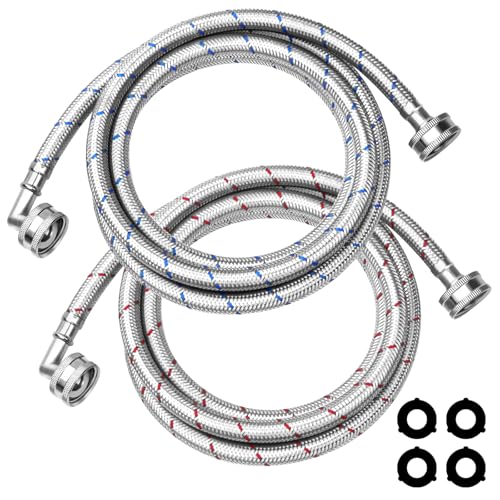
The three sets differ in the details that actually separate hoses: burst pressure ratings, certifications, core material, and fitting geometry. One carries a stated burst rating up to 1500 psi with UPC certification and lead-free compliance, one adds a 90-degree elbow that helps in tight laundry closets, and one is a long-running braided option with a pure rubber internal hose. Length is six feet across the board, which suits most laundry layouts without excess slack coiled behind the machine.
Quick Picks
As an Amazon Associate we earn from qualifying purchases.
| Product | Best for | Key spec from title |
|---|---|---|
| Hippohose OCT Connect Washing Machine Hoses, 6FT 2-Pack | Highest stated burst rating and certification | Burst proof up to 1500 psi, UPC certified |
| Puxyblue Stainless Steel Washer Hoses, 6Ft 2-Pack | Tight spaces behind the washer | 90-degree elbow fitting |
| K&J Premium Washing Machine Hoses, 6ft 2-Pack | A proven braided design with rubber core | Braided stainless steel, burst proof |
How to Choose
Choose braided stainless over plain rubber
The braid is not cosmetic. A stainless steel mesh jacket over the inner hose resists abrasion, kinking, and the slow bulging that precedes a rubber hose failure, and manufacturers back that up with burst ratings in the hundreds or thousands of psi. Plain rubber hoses are the ones insurance guidance tells homeowners to replace on a schedule. If your current hoses are unbraided rubber, or you cannot remember when they were installed, replacing them with a braided pair is the single highest-value maintenance task in the laundry room.
Read the pressure and certification lines
Two numbers matter on a hose listing: working pressure tolerance and burst rating. A stated burst proof figure, such as up to 1500 psi on the Hippohose set, describes the failure ceiling rather than everyday pressure, but a higher ceiling signals a stronger core and jacket. Certifications add a second layer of confidence: UPC certification and AB 1953 lead-free compliance, both stated for the Hippohose pair, indicate the hose met plumbing product standards rather than relying on marketing language alone. Treat uncertified hoses with unstated ratings as unknowns.
Get the length and fittings right
Six feet is the standard replacement length and reaches comfortably in most laundry rooms without leaving loops that kink behind the machine. Shorter hoses strain fittings; much longer ones coil and rub. Fittings should be 3/4-inch female hose thread on both ends for a standard washer and wall valve. A 90-degree elbow on the washer end, as on the Puxyblue set, lets the machine sit closer to the wall and reduces the bend stress where hoses most often fail. Color-coded red and blue pairs simplify correct hot and cold connections. While you measure, note the valve positions as well: hoses route best with gentle curves and no contact with the machine’s rear panel edges, and an extra few inches of slack is what lets you pull the washer forward for service without disconnecting anything.
Plan the replacement, not just the purchase
Hoses fail at fittings and bends, so installation details matter: hand-tighten plus a small wrench turn, never overtighten, and replace the rubber washers with the new ones supplied. Check that both wall valves shut off fully before you start, and run a short fill cycle while watching each connection. Even braided hoses deserve a calendar note; most guidance suggests inspecting annually and replacing within about five years, sooner if you see corrosion, fraying, or any bulge in the jacket.
The 3 Best Options
1. Hippohose OCT Connect Washing Machine Hoses, 6FT 2-Pack
The Hippohose pair carries the strongest paper specification in this group. Its listing states burst proof performance up to 1500 psi, UPC certification, and AB 1953 lead-free compliance, with a 304 stainless steel braided jacket. The two hoses are color coded for hot and cold lines, which prevents the crossed connections that leave a washer filling rinse cycles with hot water. For buyers who want the replacement decision backed by named standards rather than adjectives, this is the set that puts its ratings in writing.
Specs
- Brand: Hippohose
- Model: HHRSSH
- Length: 6 feet, 2-pack
- Construction: Braided stainless steel, 304 stainless
- Burst rating: Burst proof up to 1500 psi
- Certifications: UPC certified, AB 1953 lead free
- Lines: Color-coded hot and cold
Best for: Homeowners replacing older hoses preventively who want stated burst ratings and plumbing certifications on the listing.
Watch out for: The listing gives fewer installation extras than some rivals; confirm washers are in the box before your old hoses come off.
2. Puxyblue Stainless Steel Washer Hoses, 6Ft 2-Pack with 90° Elbow
The Puxyblue set is designed for the laundry closet problem: a washer pushed tight against the wall, with straight hose fittings forcing a sharp bend right at the connection. One end of each hose carries a 90-degree elbow, letting the hose drop vertically instead of kinking, which reduces stress at the fitting. The construction pairs a 304 stainless steel braid with an EPDM inner core, the fittings are standard 3/4-inch female hose thread, and the pack includes four gaskets so both ends of both hoses seal with fresh rubber.
Specs
- Brand: Puxyblue
- Length: 6 feet, 2-pack
- Construction: 304 stainless steel braided, EPDM core
- Fittings: 3/4-inch FHT, with 90-degree elbow
- Lines: Red and blue pair for hot and cold
- Included: 4 gaskets
Best for: Washers installed tight to the wall, where straight fittings force a bend that shortens hose life.
Watch out for: The listing does not state a burst pressure figure or plumbing certification, so it trails the Hippohose on documented ratings.
3. K&J Premium Washing Machine Hoses, 6ft 2-Pack

The K&J set follows the classic braided formula: a stainless steel braided jacket over a pure rubber internal hose, sold as a 72-inch pair and described as burst proof on its listing. It is the straightforward option for a like-for-like replacement when the existing hoses are the same style and you simply want fresh, undated lines on the machine. The standard length and conventional straight fittings suit laundry rooms with a few inches of clearance behind the washer, where elbow fittings are unnecessary.
Specs
- Brand: K&J
- Length: 6 feet (72 inches), 2-pack
- Construction: Braided stainless steel
- Core: Pure rubber internal hose
- Rating: Burst proof, per listing
Best for: Routine like-for-like replacement of aging braided hoses in a laundry room with normal clearance behind the machine.
Watch out for: The listing states fewer specifics than the Hippohose set, with no named certification, so compare ratings if your water pressure runs high.
Which One Fits Your Situation
You are replacing hoses after a leak or a scare
Start with the Hippohose pair. A burst or a bulging hose usually prompts a wider look at the laundry room, and the set with a stated 1500 psi burst rating plus UPC certification gives the most documented margin. Replace both lines at once even if only one failed, since the other is the same age and has lived the same pressure cycles.
Your washer sits in a shallow closet or tight alcove
Choose the Puxyblue set. The 90-degree elbow is a small feature that solves the most common installation flaw, the hard bend at the washer inlet. In tight spaces that bend, repeated every fill cycle as the machine vibrates, is where fittings loosen and jackets fatigue, so routing the hose straight down is worth more than a headline pressure figure.
You maintain rentals or several machines
The K&J pair is the sensible stock item: standard length, standard fittings, braided construction, and nothing exotic to mismatch across properties. Whatever set you standardize on, log the install date for each machine. A simple rotation discipline, replacing every hose on schedule rather than on failure, is what actually prevents water damage across a portfolio.
Common Mistakes
- Replacing only the hose that burst and leaving its same-age partner in service.
- Reusing old rubber washers instead of the new gaskets supplied with the set.
- Overtightening fittings with a wrench until the washer inside deforms and leaks.
- Leaving long excess hose coiled behind the machine, where it rubs and kinks.
- Never inspecting the hoses again; braided jackets still corrode, fray, and age.
Frequently Asked Questions
How long do braided stainless washing machine hoses last?
Common guidance is to inspect them annually and replace them roughly every five years, sooner if you spot corrosion at the fittings, frayed braid, bulges, or slow drips. The braid extends service life compared with plain rubber, but the inner core and the crimped fitting joints still age under constant line pressure. Writing the install date on a tag attached to the hose makes the schedule easy to keep.
Are 6-foot hoses the right length for most washers?
Yes, six feet is the standard replacement length and suits most laundry rooms, giving enough slack to pull the machine out for service without straining the fittings. Measure your run if the valves sit unusually far from the machine. Avoid going much longer than needed, because excess hose coils behind the washer, where it can kink, rub against the cabinet, and hide early signs of wear from view. If your valves sit above the machine rather than behind it, count that vertical drop in your measurement before assuming the standard length works.
What does a burst rating of 1500 psi actually mean?
It is the pressure level the hose is stated to withstand before bursting, not the pressure it sees in service; household water pressure is far lower. The figure matters as a strength signal for the core, braid, and crimped joints. A hose with a high stated burst rating and a plumbing certification such as UPC has documented margin, while a hose with no stated rating asks you to trust the braid alone.
Can I install these hoses myself?
Most homeowners can. You need to shut off both valves, drain the old hoses into a bucket, thread the new fittings on by hand and snug them with a small additional turn, then check every connection through a fill cycle. The elbow-equipped set helps where space is tight. If a wall valve will not shut off fully or a fitting is corroded in place, that is the point to call a plumber instead.
More from Amazon
Programs that pair well with the guide above. Offers and eligibility are set by Amazon and may change.
Set up recurring deliveries of everyday items on eligible products. Terms and savings are set by Amazon.
Explore Subscribe & SaveCollect the home and kitchen items you want in one registry that guests can shop from.
Create a wedding registryFree shipping on eligible items, Prime Video and more. Eligible new members can start with a free trial.
Start a Prime free trialAudiobooks and podcasts to listen to on the go. Eligible new members can start with a free trial.
Try Audible freeAs an Amazon Associate we earn from qualifying purchases.


Write Your Review
No reviews yet. Be the first to share your experience!